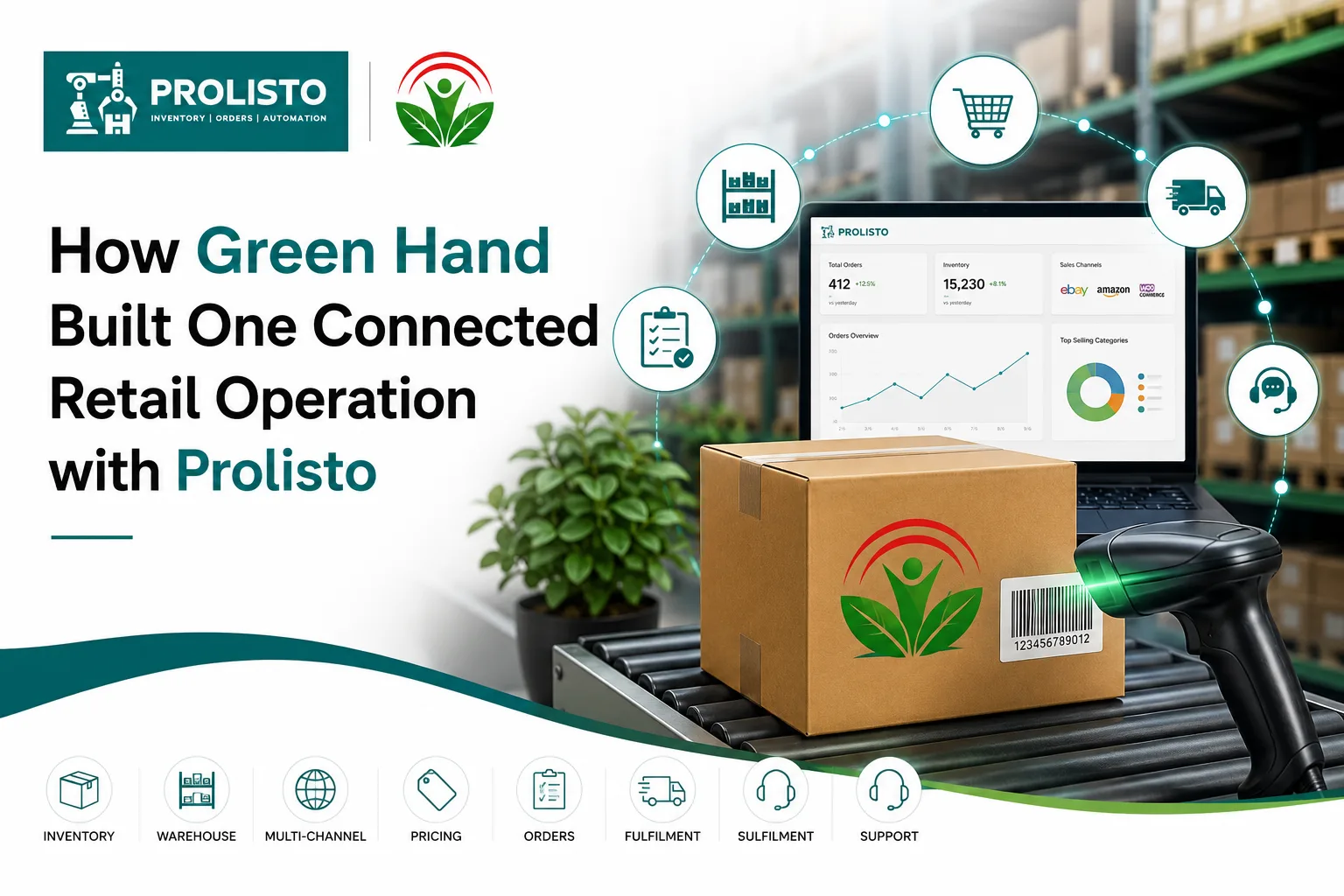

Warehouse inventory management plays a defining role in determining how efficiently an ecommerce business operates and grows. In today’s competitive landscape, customers expect fast shipping, real-time order updates, and accurate product availability. If your warehouse inventory management system fails to deliver on these expectations, it can lead to delayed shipments, stockouts, and customer dissatisfaction, directly affecting your store’s reputation and repeat sales.
Effective warehouse inventory management ensures that every item is accounted for, properly stored, and ready for dispatch when needed. It optimizes picking, packing, and replenishment workflows, helping businesses minimize operational costs and reduce fulfilment time. This level of control not only improves customer satisfaction but also enables smarter purchasing decisions.
Why Warehouse Inventory Management Is Critical for Ecommerce Success
Modern ecommerce sellers using advanced warehouse management systems (WMS) gain real-time visibility over stock movement, inventory accuracy, and warehouse efficiency. This data-driven approach transforms warehousing from a back-end operation into a core growth engine, helping ecommerce brands maintain profitability, scale seamlessly, and meet rising customer expectations without compromising speed or accuracy.
This guide explores everything you need to know about warehouse inventory management, including inventory tracking, warehouse management systems (WMS), inventory accuracy, and how to improve warehouse efficiency. We’ll also cover how dynamic inventory item locations and solutions to transform your warehouse operations.
What Is Warehouse Inventory Management?
Warehouse inventory management is the combined process of managing both the physical movement of goods within a warehouse and the digital accuracy of inventory records. It integrates warehouse management system (WMS) workflows, such as receiving, put away, storage, picking, and dispatch along with inventory management system (IMS) processes like real-time stock tracking, forecasting, and replenishment. Together, these functions ensure that every unit in your warehouse is correctly stored, accurately recorded, and ready for fulfilment at the right time
Together, your WMS and IMS form the backbone of a successful fulfilment strategy. Integrating both systems helps minimise errors, reduce costs, and deliver consistent fulfilment accuracy. For more insight, the UK Warehousing Association (UKWA) offers additional resources on UK warehouse best practices.
Example- A mid-sized ecommerce brand using a WMS reported that changing from manual stock tracking to a fully digital system reduced stock discrepancies by 82% and improved order-picking accuracy from 91% to 98.7% within three months. This demonstrates how combining an IMS with a WMS directly improves inventory accuracy and warehouse efficiency.
Understanding Types of Warehouse Management Systems (WMS)
Warehouse Management Systems (WMS) come in several configurations, each designed to support different operational requirements, warehouse sizes, and levels of complexity. While all WMS platforms deliver core capabilities, barcode scanning, bin and shelf management, pick-path optimisation, put away guidance, cycle counting workflows, and real-time inventory visibility. The type of WMS you choose determines scalability, flexibility, and long-term suitability.
Below are the four main types of WMS used in modern warehouse environments.
1. Standalone WMS
A standalone WMS is a dedicated warehouse system focused purely on operational efficiency.
Key characteristics:
- Built specifically for warehouse workflows (picking, put away, routing)
- Highly configurable storage and picking logic
- Strong operational reporting and analytics
- Integrates easily with IMS tools, ecommerce platforms, and couriers
Best suited for:
Growing ecommerce sellers, 3PLs, and warehouses needing strong functionality without ERP complexity.
2.ERP-Integrated WMS
Part of a larger Enterprise Resource Planning suite, connecting warehouse operations to the rest of the business.
Key characteristics:
- Unified data across purchasing, finance, and inventory
- Enterprise-wide visibility and reporting
- Strong governance and compliance
- More rigid, complex, and costly to configure
Best suited for:
Retailers, wholesalers, and large enterprises needing centralised control across departments.
3.Cloud-Based WMS (SaaS)
Cloud-based WMS platforms run on vendor-managed servers and offer rapid deployment.
Key characteristics:
- Quick implementation with minimal IT requirements
- Subscription pricing with automatic updates
- Accessible from any device or location
- Scales easily as order volume grows
Best suited for:
Ecommerce sellers, SMEs, and multi-location warehouses needing flexibility and low maintenance.
4.On-Premise WMS
Installed directly on the organization’s local servers, offering maximum control.
Key characteristics:
- Full ownership and control of system infrastructure
- High potential for customisation
- Requires strong internal IT support
- Higher upfront and ongoing maintenance costs
Best suited for:
Enterprises with complex workflows, strict security requirements, or regulatory constraints.
Dynamic Inventory Item Locations: A Modern WMS Advantage
Modern WMS solutions increasingly support dynamic inventory item locations, allowing a single SKU to be stored in multiple warehouse areas simultaneously.
Benefits:
- Faster receiving and put away
- More efficient overflow and bulk storage
- Reduced congestion in high-pick areas
- Faster picking with multiple access points
Example: During peak periods such as Black Friday or Christmas, warehouses often experience a 2-5X increase in order volume. Dynamic inventory item locations allow staff to create temporary overflow zones and fast-pick areas, helping reduce pick congestion and maintain consistent fulfilment speeds even under significant demand pressure.
How to Improve Warehouse Inventory Management Efficiency
Improving warehouse inventory management efficiency requires a balance of smart processes, strong technology, reliable inventory accuracy, and a well-trained team. While tools such as a warehouse management system (WMS) play a major role, true optimisation comes from combining digital accuracy with operational best practices on the warehouse floor.
Below are the most effective strategies to strengthen warehouse inventory management, streamline operations, and boost fulfilment speed.
Improve Warehouse Layout to Enhance Efficiency
A well-designed layout reduces unnecessary movement and helps teams work faster.
To improve warehouse efficiency, start by:
- Placing high-demand SKUs closer to dispatch zones
- Grouping related products to reduce walking time
- Labelling aisles, racks, and zones clearly
- Using vertical storage to maximise space
- Maintaining safe picking pathways
For more layout and safety guidelines, the Health and Safety Executive (HSE) provide extensive warehouse safety best practices.
Use Cycle Counting to Maintain Inventory Accuracy
Cycle counting is one of the most reliable methods to keep inventory accuracy consistently high. Instead of shutting down operations for full annual stocktakes, cycle counts:
- Catch discrepancies early
- Maintain accurate stock levels
- Prevent overselling
- Improve confidence in your IMS and WMS
- Increase accountability across warehouse teams
High-performing warehouses aim for 97%-99% inventory accuracy through regular cycle counts.
Strengthen Labelling and Location Identification
Clear labelling is essential for accurate inventory tracking.
Ensure:
- Every shelf, bin, pallet, and rack is labelled
- Barcodes are scannable and consistent
- Warehouse zones (A/B/C) are clearly marked
This reduces search time and prevents mis picks.
Integrate Quality Control (QC) into Every Shift
Quality control should be an ongoing workflow, not an afterthought. Strong QC helps:
- Reduce returns
- Increase order accuracy
- Identify damaged or incorrect items early
- Maintain customer satisfaction
QC checks may include SKU verification, quantity checks, packaging integrity, and scanning confirmation before dispatch.
Implement Dynamic Inventory Item Locations to Improve Warehouse Efficiency
Dynamic inventory item locations are one of the most effective ways to improve warehouse efficiency.
By allowing the same SKU to be stored across multiple bins or shelves, you can:
- Reduce congestion in high-pick zones
- Speed up picking
- Use warehouse space more intelligently
- Create overflow and fast-pick zones during peak periods
- Support flexible replenishment
Leverage Data, Inventory Tracking, and Advanced Tools
A future-ready warehouse uses real-time inventory tracking and analytics to drive continuous improvement. Advanced tools such as:
- Predictive analytics
- Slotting optimisation
- Demand forecasting
- Heat-map picking data
These capabilities are enhanced when supported by a cloud-ready warehouse management system (WMS) that centralises data, automates workflows, and keeps every part of the operation synchronized.
Choosing the Right Warehouse Inventory Management Software
Selecting an effective warehouse inventory management system requires evaluating software that offers real-time inventory tracking, dynamic location support, multi-bin storage, barcode scanning, and pick-path optimization. The ideal WMS should also integrate easily with your sales channels, feature a simple user interface, and provide reliable reporting.
Master Your Warehouse Inventory Management with Prolisto
Prolisto enables ecommerce sellers to unify and control their inventory across multiple marketplaces and warehouses, combining digital stock synchronization with warehouse-friendly workflows to deliver accurate, scalable inventory operations.
Key benefits & features of Prolisto:
- Real-time multi-channel inventory tracking and synchronisation across Amazon, eBay, WooCommerce and other marketplaces (reduces risk of overselling or stockouts).
- Centralised product catalogue and stock control: manage SKUs, quantities, and listings from a single dashboard (simplifies operations if you sell across many channels).
- Automated stock updates: whenever inventory moves or sells on one channel, Prolisto updates stock everywhere automatically (supports accuracy and consistency).
- Support for dynamic inventory and multi-location stock control: helpful for sellers using more than one warehouse or storage location.
- Workflow automation to reduce manual effort: including product listing, order processing, and inventory adjustments to speed up fulfilment and reduce human errors.
Conclusion: Build a Warehouse That Drives Growth
Warehouse inventory management is no longer just an operational necessity, it’s a strategic advantage. By combining accurate inventory tracking, efficient warehouse layout design, staff training, and advanced WMS tools, ecommerce businesses can build fulfilment processes that scale with demand and uphold exceptional accuracy. With solutions like Prolisto supporting modern operations, sellers can ship faster, reduce costs, and maintain the inventory accuracy needed to stay ahead of competitors in a fast-moving ecommerce environment.
FAQs
How does a warehouse management system (WMS) improve warehouse efficiency?
A warehouse management system (WMS) improves efficiency by streamlining receiving, put away, picking, and inventory tracking. It automates workflows, reduces manual errors, optimizes pick paths, and ensures stock is stored in the most efficient locations.
What is inventory tracking and why is it important?
Inventory tracking monitors the movement, storage, and quantity of stock in real time. It prevents overselling, reduces mis picks, maintains consistent stock levels across sales channels, and supports accurate order fulfilment.
How can I improve inventory accuracy in my warehouse?
To improve inventory accuracy, implement cycle counting, barcode scanning, quality control checks, clear labelling, and a reliable WMS. High-performing warehouses aim for 97–99% accuracy to minimise errors and fulfilment delays.
How do dynamic inventory item locations improve warehouse efficiency?
Dynamic inventory locations allow SKUs to be stored across multiple bins or shelves. This reduces congestion, speeds up put away, increases picking speed, and improves warehouse efficiency during peak seasons.
What are the best ways to improve warehouse efficiency overall?
Some of the best ways to improve warehouse efficiency include optimizing warehouse layout, using ABC slotting, improving staff workflows, using barcode automation, implementing cycle counting, and adopting a WMS with real-time tracking features.