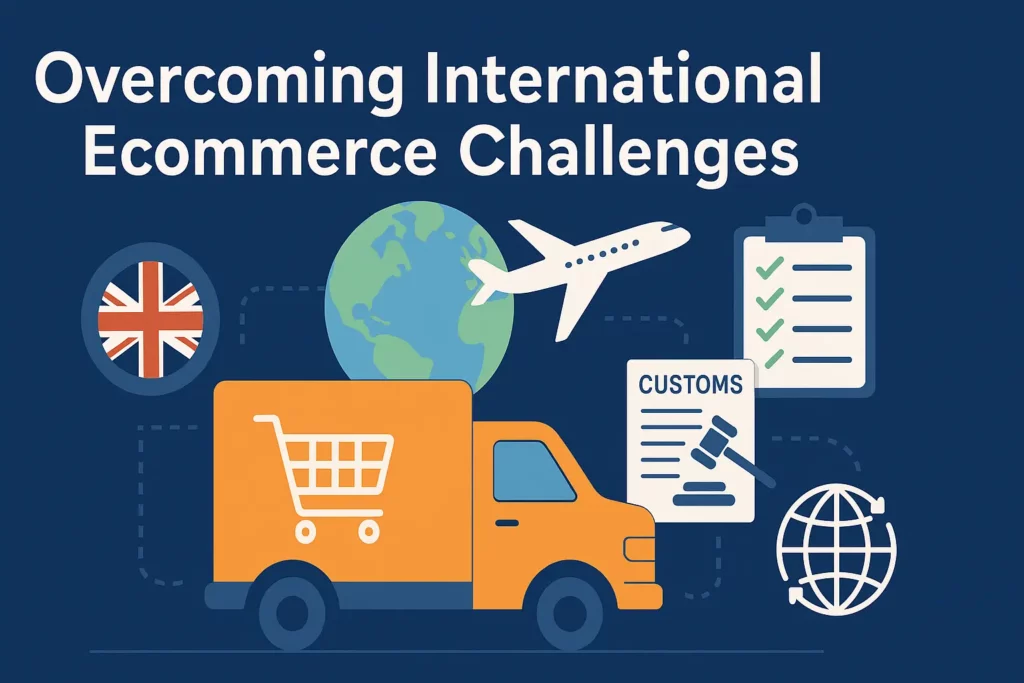
Selling internationally is one of the best ways for UK ecommerce businesses to grow. But the moment you begin shipping overseas, operations become more complex. Suddenly, you’re dealing with new carriers, customs processes, international taxes, packaging rules, and regulations that vary widely by country.
This guide explains how to overcome international ecommerce challenges by giving UK sellers practical steps to reduce delays, stay compliant, and deliver a seamless customer experience across borders. let’s dive into every aspects in details
Practical Ways to Reduce International Shipping Challenges
Reducing international shipping challenges starts with strengthening your logistics foundation. Carriers with solid global networks offer more reliable handovers between countries, fewer scanning failures, and better tracking visibility.
Accurate customs forms, clear labels, and consistent product descriptions significantly reduce delays caused by early-stage errors. Sellers should also set delivery expectations based on real transit data rather than optimistic best-case scenarios. Customers value honesty more than speed.
Clear tracking keeps buyers informed and reduces “Where is my order?” messages. Strong communication creates trust, even when delays happen.
You can find official UK export documentation guidance here:
https://www.gov.uk/topic/business-tax/import-export
Understanding Delays in International Shipping and How to Prevent Them
International shipping doesn’t operate with the same consistency as domestic delivery, and the reasons are clear. Once a parcel leaves the UK, it moves through multiple air hubs, sorting centers, and customs checks managed by different countries. Limited tracking visibility, peak-season congestion, and inconsistent handling make delays more common.
Most delays in international shipping come from predictable issues: incomplete paperwork, inaccurate product descriptions, or bottlenecks in overseas networks. While no seller can control every part of the journey, understanding where delays occur helps you plan smarter and avoid preventable setbacks.
Preparing accurate documentation, selecting reliable carriers, and offering realistic delivery timelines are essential steps for improving international delivery performance.
Best Solutions for Customs Delays in Ecommerce for UK Sellers
Customs is one of the biggest challenges for ecommerce businesses selling internationally. The best solutions for customs delay in ecommerce focus on accuracy, consistency, and compliance. Customs officers verify product classification, values, licensing, and documentation. Errors or missing information often trigger manual inspections that slow down delivery.
When customs receive clear and complete information, parcels move through more quickly and with fewer risks of rejection.
How to Prevent Customs-Related Delays in International Shipping
Correct HS codes, accurate descriptions, and truthful declared values are essential for fast customs clearance. The UK Trade Tariff tool helps verify codes:
https://www.gov.uk/trade-tariff
Most customs check result from mismatched product details across digital and printed invoices. Ensuring consistency across all documents reduces scrutiny.
Sellers also need to understand destination-country restrictions. Electronics, cosmetics, food products, supplements, and batteries often require additional documentation. Being transparent with customers about duties and taxes prevents refused deliveries.
When customs have no questions about your shipment, parcels move quickly through the system.
Global Ecommerce Regulations That Affect UK Sellers
As global ecommerce evolves, compliance requirements are becoming more detailed. Understanding global ecommerce regulations ensures smoother customs clearance, protects customers, and avoids penalties.
Three regulations heavily affect UK-to-EU ecommerce:
- IOSS (Import One-Stop Shop)
- German Packaging Regulation (VerpackG)
- EU Product Safety Requirements / GPSR
These regulations help customs process parcels more efficiently—when sellers comply.
How IOSS Reduces Delays in International Shipping to the EU
The Import One-Stop Shop (IOSS) is an EU VAT system designed to simplify how sellers collect and pay VAT on low-value goods (under €150) shipped to EU customers. Instead of VAT being charged when the parcel reaches customs, IOSS lets sellers collect VAT at checkout and pay it through a single monthly return.
This removes one of the biggest contributors to delays in international shipping, border VAT assessment. With IOSS:
- VAT is prepaid and recorded electronically
- Parcels are processed more quickly by EU customs
- Customers avoid surprise VAT and handling fees
- Delivery rates improve because fewer orders are refused
For UK sellers, using IOSS leads to faster customs clearance, smoother delivery timelines, and a more predictable international shipping process.
German Packaging Regulation and Why UK Sellers Must Comply
Germany’s Packaging Act (VerpackG) places strict recycling and reporting obligations on any business shipping goods to German consumers. One key requirement is registering with LUCID, the official German Packaging Register. LUCID is a public database that records which companies are complying with German packaging laws.
To meet VerpackG requirements, UK sellers must:
- Register with the LUCID Packaging Register (a mandatory, public online database)
- License all packaging materials through a Dual System (a certified recycling scheme)
- Report annual packaging volumes
Failure to comply can result in fines, product listings being blocked, or parcels being stopped at customs. Germany enforces VerpackG very strictly, and non-compliance can disrupt delivery and damage your brand reputation.
Following VerpackG requirements ensures smoother access to Europe’s largest ecommerce market and prevents compliance-related shipping delays.
Product Safety Regulations and Their Impact on International Shipping Challenges
Product safety is a critical part of customs clearance, and missing safety documentation is one of the most common reasons parcels are delayed or rejected at international borders.
A key regulation for UK sellers shipping into the EU is the General Product Safety Regulation (GPSR). GPSR is the EU’s main safety framework that ensures all consumer products sold within the EU are safe, properly labelled, and traceable. It applies to thousands of product categories, including electronics, toys, cosmetics, homeware, and personal care items. Under GPSR, sellers must:
- Ensure products meet EU safety standards
- Provide clear warnings and usage instructions
- Identify an EU-based “Responsible Person” for product safety
- Supply technical documentation, testing reports, or certificates when required
- Use traceable batch or serial numbers for tracking and recalls
By ensuring full compliance with GPSR and country-specific safety requirements, UK sellers reduce customs delays, prevent rejected shipments, and build stronger customer trust across global markets.
How to Overcome International Ecommerce Challenges in Logistics & Fulfilment
Your fulfilment strategy plays a huge role in how efficiently you can deliver internationally. Sellers who rely only on UK-based fulfilment often face longer transit times, higher shipping costs, and more frequent customs involvement. Expanding to EU or US fulfilment centres or partnering with global 3PL networks can reduce delivery time from 7-10 days to as little as 2-4 days, giving customers a faster and more reliable experience.
Automation tools that sync stock levels, generate customs documentation automatically, and update tracking information help eliminate manual errors and improve both speed and accuracy.
A major improvement for UK sellers has also been the introduction of Royal Mail’s PDDP (Pre-Declared Duty Paid) service. Royal Mail PDDP is especially useful for UK sellers who want the benefits of DDP (Delivered Duty Paid) without complex carrier integrations. It creates a more seamless cross-border journey and helps avoid one of the most common causes of delays in international shipping is unpaid duties at the border.
By combining strong fulfilment planning, automation, and improved services like Royal Mail PDDP, UK sellers can overcome many of the major international ecommerce challenges and create a more reliable, scalable global shipping operation.
Localization as a Strategy for Solving International Ecommerce Challenges
International customers are more likely to purchase from brands that feel familiar and accessible. Localization involves translating content, tailoring tone, using local measurements, providing local currencies, and adapting imagery to cultural preferences.
Well-localized product pages improve customer confidence, reduce confusion, and increase conversion rates in international markets.
Building Effective Global Customer Support Systems to Overcome Challenges
Cross-border selling means supporting customers across different time zones, languages, and expectations. Offering multilingual support, maintaining a helpful knowledge base, and using 24/7 chatbots ensures customers receive assistance whenever they need it.
Clear returns policies and proactive communication reduce complaints and build long-term trust.
How to overcome international ecommerce challenges: Real-Life Example of a UK brand
A UK skincare brand faced multiple international ecommerce challenges when expanding into Europe. Their journey highlights how the brand addressed the challenges:
Key Challenges & Solutions:
- Inconsistent delivery times:
Parcels took anywhere from 3 to 10 days to arrive due to unclear product descriptions and inconsistent documentation.
Solution: Corrected HS codes and improved labelling, leading to more stable delivery times. - Frequent customs delays:
Manual inspections occurred regularly due to mismatched product details.
Solution: Automated documentation and standardized product data, which reduced customs checks. - Unexpected VAT charges for EU customers:
Before joining IOSS, customers often refused parcels due to surprise fees.
Solution: Registered for IOSS, resulting in faster clearance and higher delivery success. - German Packaging Regulation (VerpackG) non-compliance:
Parcels to Germany were delayed because the brand had not registered with LUCID or licensed its packaging.
Solution: Registered with LUCID and fulfilled packaging obligations, eliminating delays. - Product safety documentation issues:
Shipments to Spain were held due to missing safety files for certain skincare ingredients.
Solution: Updated safety documentation and corrected product labelling. - Slow delivery due to UK-only fulfilment:
Shipping from the UK increased transit times and customs involvement.
Solution: Shifted part of their inventory to an EU fulfilment center, cutting delivery times significantly. - Low conversions in Europe due to language and currency barriers:
Customers struggled with English-only product pages and GBP pricing.
Solution: Localised content, added local currencies, and introduced multilingual support, which boosted sales and reduced enquiries.
This real-life scenario shows how addressing documentation, compliance, fulfilment strategy, and localization can help sellers successfully overcome international ecommerce challenges and improve global customer experience.
FAQs
Why do international shipments get delayed so often?
Delays happen due to customs checks, incomplete documentation, peak-season congestion, weather issues, and inconsistent carrier handovers. Most delays are preventable with accurate paperwork and reliable logistics partners.
How can UK sellers avoid EU VAT issues?
Using IOSS ensures VAT is paid at checkout, reducing customs delays and preventing unexpected fees for customers.
What documents are essential for smooth customs clearance?
You need accurate HS codes, commercial invoices, correct product descriptions, and any required certificates or safety documents.
Do UK sellers need to comply with the German Packaging Regulation?
Yes. Any seller shipping to German consumers must comply with VerpackG. Without registration, parcels can be delayed or rejected.
What is the best way to improve international delivery times?
Combining accurate documentation, reliable carriers, and fulfilment centers closer to customers significantly improves delivery speed.