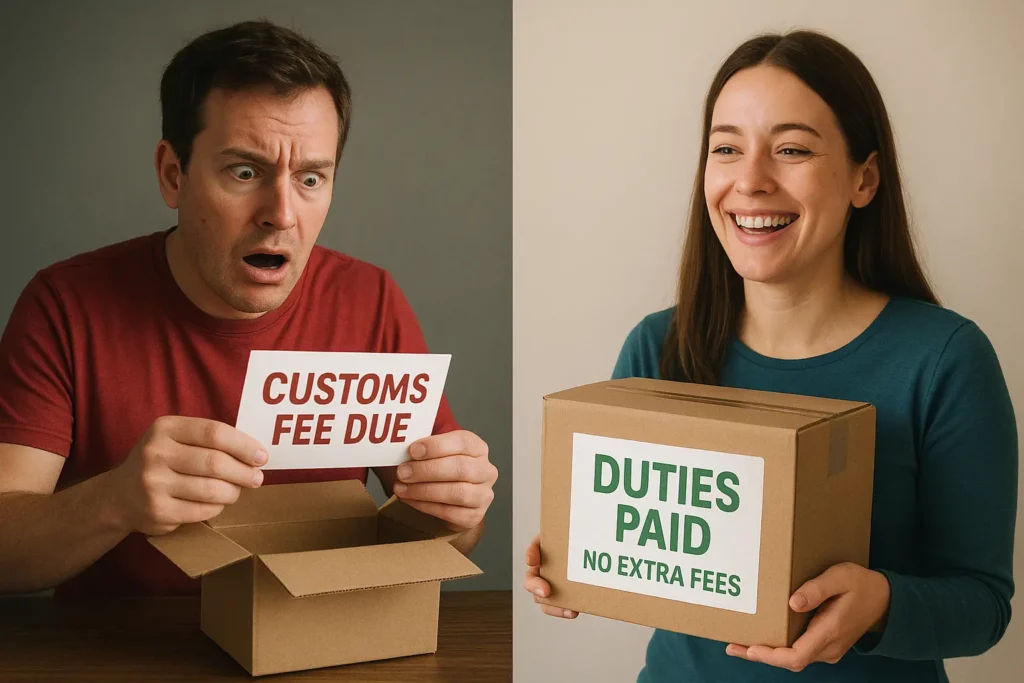
Imagine an American customer buys one of your products, but weeks later, you get an angry one-star review. Why? They were hit with a surprise royal mail custom fee and their parcel was stuck in customs. This scenario is about to become the new reality for many UK sellers. A major change in US import law, set to remove the $800 duty-free allowance, will affect every single parcel you send. Suddenly, shipping to your biggest international market feels complicated and risky. But don’t worry, there’s a straightforward solution. This guide will walk you through the Royal Mail PDDP (delivery duties paid) service is designed to handle these new us customs duties upfront. This modern, data-driven process is a world away from the custom postage stamps UK sellers once used, and its key to keeping your parcels moving and your customers happy.
What’s Changed? A Simple Breakdown of the New US Customs Duties
For years, a rule called the “de minimis” exemption was a huge help for UK sellers. It allowed any shipment valued under $800 to enter the US free from import taxes and duties. It was a simple, seamless process that fueled the growth of cross-border e-commerce.
However, as of August 29, 2025, this exemption has been officially suspended by the US government. The change was driven by the massive increase in e-commerce shipments and a desire to level the playing field for domestic retailers. This means nearly every product you ship to the US, regardless of its value, is now subject to duties.
The Real-World Impact of New US Customs Duties for UK Sellers
This policy shift created immediate and significant challenges for sellers who weren’t prepared:
- Widespread Customer Complaints: US buyers were suddenly faced with unexpected fees to release their parcels from customs. For the customer, this feels like a hidden charge, leading to frustration, abandoned parcels, and angry messages demanding refunds.
- Sudden Operational Delays: The new requirements caught many off guard. International postal services had to reconfigure their systems, causing them to temporarily pause shipments. This created backlogs and left sellers unable to fulfil US orders.
- A Confusing and Uncertain Cost Structure: Sellers were left scrambling to understand and manage a new royal mail custom fee system. Without a clear way to handle these costs, many feared they would have to stop selling to the US altogether.
The Solution: What is the Royal Mail PDDP Service?
Royal Mail was one of the first postal operators to create a solution to this new challenge with its Postal Delivery Duties Paid (PDDP) service. Think of it as the ‘all-inclusive’ option for your international shipping, designed to make cross-border trade feel domestic.
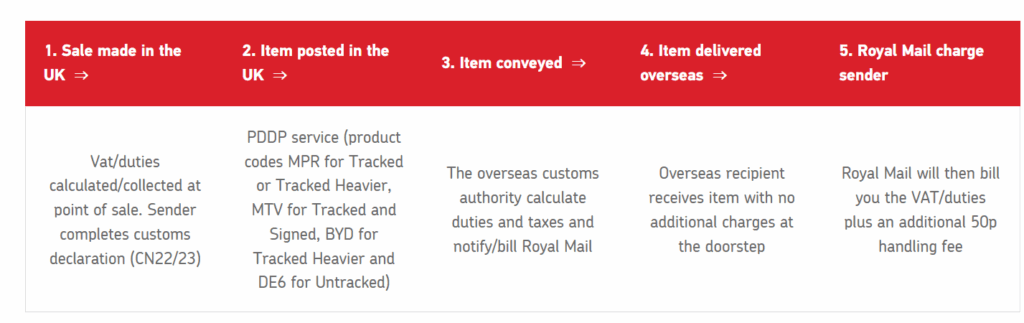
Royal Mail PDDP is a service that allows you, the seller, to calculate and pay all US import duties and fees at the moment you purchase postage. Your parcel then travels with a special electronic status that tells US Customs that all charges have been settled, allowing it to clear customs without delay.
How the Royal Mail Custom Fee Works in Practice
When you use PDDP, the costs are straightforward and transparent. For goods manufactured in the UK, the US typically applies a 10% tariff on the item’s value. Royal Mail calculates this amount, collects it from you, and adds a small handling fee to cover the administrative costs of processing the payment with US authorities. A crucial point for sellers to save money:
Online vs. In-Person: When you purchase PDDP postage online through a portal like Click & Drop, the handling fee is a flat 50p per parcel. However, some sellers have reported being charged a higher fee of £1.50 when paying for the service in person at a Post Office. For cost consistency and efficiency, using an online portal is the recommended approach.
Step-by-Step Guide: Using Royal Mail PDDP for Your US Shipments.
Ready to make your US shipping stress-free? Here’s exactly how to do it. Adopting this service is a simple process that can be built into your everyday workflow. Here’s how UK sellers can make sure parcels arrive in the US with delivery duties paid and no surprise charges for customers.
Step 1: Confirm Product Details and Eligibility
Before you ship, check the key details that determine US customs duties:
- Item value – use the exact price paid by the customer.
- Country of origin – where the item was manufactured (e.g., UK, China). This impacts duty rates.
- HS code – the global customs classification code for your product. You can find this via the UK government’s Trade Tariff tool.
- Eligibility – remember, Royal Mail PDDP is for merchandise. Gifts under $100 and personal letters may still be exempt from duties.
Step 2: Complete Accurate Customs Documentation
Accuracy here saves delays. You’ll need to complete a CN22 or CN23 customs form when shipping outside the UK. Make sure you include:
- A clear, honest product description (e.g., “Men’s cotton t-shirt”).
- “Always declare the sale price in GBP (British pounds). US customs will automatically convert it into USD when calculating duties.”
- The country of manufacture.
In the past, sellers relied on custom postage stamps UK traders would attach to parcels. Today, everything is handled digitally—your customs data is transmitted electronically through Royal Mail.
Step 3: Purchase Postage with the Royal Mail PDDP Option
When you buy postage, you can choose the Royal Mail PDDP service. This means all delivery duties paid costs are settled upfront.
- Online (Recommended): Use Royal Mail’s Click & Drop. The system automatically calculates the Royal Mail custom fee (50p handling fee online) plus any applicable US duties, then adds them to your postage cost.
- At the Post Office: You can also ask staff to process PDDP in person, but reports show the handling fee can be higher (around £1.50).
Your shipping label will display duty-paid status, helping parcels pass through US customs without delays.
Step 4: Communicate Clearly with Customers
Transparency is a powerful selling point. Let US buyers know you’re using Royal Mail PDDP so they won’t face unexpected US customs duties.
- Update your eBay, Amazon, or Shopify listings with a simple note:
“All customs duties and fees prepaid with Royal Mail PDDP – the price you see is the final price.” - Highlight the benefit: faster delivery, no surprise bills, stress-free shopping.
This turns a potential negative (hidden fees) into a competitive advantage that builds trust and loyalty.
How PDDP Works for Business Account Customers
If you are a business customer with a Royal Mail account, the process is even more streamlined and designed to fit into your existing operations. Here are the key differences that make it so efficient:
- Seamless Invoicing: Instead of paying the duties for each parcel individually at the time of shipping, Royal Mail pays the US Customs fees on your behalf. These duties, along with the 50p handling fee per parcel, are then added to your regular invoice for payment later. This keeps your dispatch process fast and cash flow friendly.
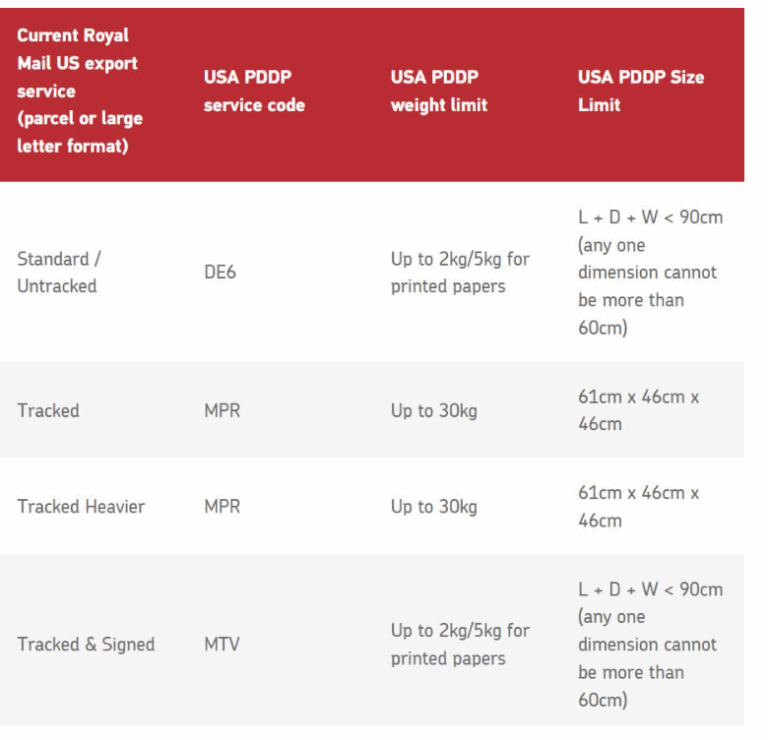
- Automatic Service Updates: There’s no complicated setup required. If you were already using Royal Mail export services to the USA, the new PDDP product codes have been automatically added to your account. You can start using the service without needing to reconfigure your shipping profiles.
Conclusion
The end of the US de minimis rule was a significant hurdle for UK ecommerce sellers, but it doesn’t have to be a barrier to growth. By proactively using a Delivery Duties Paid solution like the Royal Mail PDDP service, you can turn a potential customer service nightmare into a competitive advantage. You provide full transparency, ensure faster delivery, and build the trust that is essential for a successful international business.
If you choose to use replacement PDDP services to the USA, you are agreeing to the service terms & conditions. For more information about the terms of this service, please refer to Royal mail shipping guide and view the International Business Parcels user guide.
FAQs
Do I have to use the Royal Mail PDDP (Delivery Duties Paid) service to ship to the US?
Not strictly—but it’s highly recommended. Sending parcels with duties unpaid (DDU) often means your US customer will face surprise fees on delivery. This leads to delays, refused parcels, and negative reviews. With Royal Mail PDDP (Delivery Duties Paid), you handle duties upfront, so your parcels arrive smoothly.
Are gifts to the US still exempt from US customs duties?
Yes, but only under strict conditions. Genuine gifts valued under $100, sent from one individual to another, may enter duty-free. Business shipments sold to customers do not qualify as gifts and are still subject to US customs duties.
How much is the Royal Mail custom fee when using PDDP?
When you buy PDDP postage online via Click & Drop, the Royal Mail custom fee (handling fee) is 50p per parcel. Some sellers report higher fees (around £1.50) when paying at a Post Office counter, so using online tools is the most cost-effective option.
Does Royal Mail PDDP replace custom postage stamps UK sellers used before?
Yes. In the past, UK sellers relied on physical custom postage stamps and labels to declare shipments. With Royal Mail PDDP, everything is handled digitally—your product data (value, HS code, origin) is transmitted electronically, and duties are paid upfront.
How do I handle Royal Mail PDDP for my Shopify, eBay, or Amazon store?
Many ecommerce platforms integrate directly with Royal Mail PDDP. If your marketplace doesn’t yet support PDDP labels, you can buy postage on Royal Mail’s Click & Drop and manually upload the tracking number to your order. This ensures a Delivery Duties Paid process for smooth customer delivery.
Can business account customers use Royal Mail PDDP for delivery duties paid shipping?
Yes. Business users benefit from streamlined invoicing—Royal Mail pays US customs duties on your behalf, then adds them (plus the 50p handling fee) to your regular invoice. This keeps your delivery duties paid shipping process fast and efficient.